
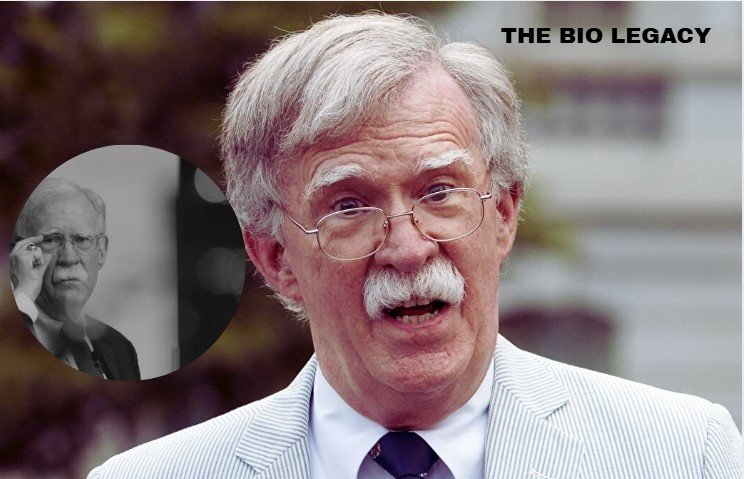
John Bolton is a name that has become synonymous with strong foreign policy, national security expertise, and bold political opinions. Over the decades, he has served in some of the most influential positions within the U.S. government, shaping key policies on international relations, defense, and global diplomacy. Known for his assertive views on American power and his staunch belief in U.S. sovereignty, Bolton’s career offers a fascinating look into how ideology can drive foreign policy decisions.
Below, we’ll explore who John Bolton is, his background, career milestones, political philosophy, and the controversies that have made him one of the most polarizing figures in American politics.
Early Life and Education
John Robert Bolton was born on November 20, 1948, in Baltimore, Maryland. Raised in a working-class family, Bolton’s early years were defined by hard work and discipline. His father was a firefighter, while his mother was a homemaker. These humble beginnings played a role in shaping his strong sense of independence and determination.
Bolton attended McDonogh School, a prestigious private preparatory school, where he excelled academically. He later went on to study at Yale University, earning a Bachelor of Arts degree in 1970 and a Juris Doctor (J.D.) from Yale Law School in 1974. During his time at Yale, he developed a keen interest in political science and conservative thought, which later influenced his professional trajectory.
Early Career in Law and Politics
After graduating from Yale Law School, John Bolton began his career as an attorney at Covington & Burling, a prominent Washington, D.C. law firm. However, his interest in public service soon drew him toward politics.
In the 1980s, Bolton entered government service during the Ronald Reagan administration, working in several important roles within the U.S. Department of Justice and the U.S. Agency for International Development (USAID). His sharp intellect and strong conservative views made him a rising star in Republican circles.
By the late 1980s, Bolton had already built a reputation as a dedicated policy expert with a firm belief in American exceptionalism — the idea that the United States holds a unique and superior role in global affairs.
Key Roles in Government
Assistant Secretary of State for International Organization Affairs
One of John Bolton’s most notable early government positions came during President George H.W. Bush’s administration, where he served as Assistant Secretary of State for International Organization Affairs from 1989 to 1993. In this role, Bolton oversaw U.S. relations with international organizations, including the United Nations.
Bolton was outspoken about his skepticism toward the UN, often criticizing its bureaucracy and questioning its effectiveness in addressing global crises. He famously said, “If the UN Secretariat building in New York lost ten stories, it wouldn’t make a bit of difference.” This remark reflected his belief that international institutions should never override U.S. sovereignty or dictate American policy.
Under Secretary of State for Arms Control and International Security
During George W. Bush’s presidency, Bolton was appointed as Under Secretary of State for Arms Control and International Security from 2001 to 2005. This position placed him at the center of post-9/11 national security issues, particularly concerning weapons of mass destruction (WMDs).
Bolton played a major role in shaping the Bush administration’s stance on Iraq, North Korea, and Iran — three nations he labeled as threats to global security. He was a strong advocate for the Iraq War, believing that Saddam Hussein’s regime possessed weapons of mass destruction. Although that claim was later proven false, Bolton continued to defend the invasion as a necessary step to eliminate potential threats.
U.S. Ambassador to the United Nations
In 2005, President George W. Bush appointed John Bolton as the United States Ambassador to the United Nations. The appointment was controversial and faced strong opposition in the Senate due to Bolton’s previous criticisms of the UN. As a result, Bush used a recess appointment to bypass the Senate and place Bolton in the role temporarily.
As ambassador, Bolton took a tough stance on issues such as nuclear proliferation, terrorism, and international reform. He pushed for stronger sanctions against Iran and North Korea and demanded greater accountability from the UN. His tenure was short-lived, however, lasting only until 2006 when his nomination was withdrawn due to continued political opposition.
Return to Commentary and Public Policy
After leaving the UN, Bolton returned to public life as a political commentator, author, and senior fellow at the American Enterprise Institute (AEI). He became a familiar face on news networks like Fox News, where he frequently discussed foreign policy, defense, and national security.
During this period, Bolton also wrote several books outlining his political philosophy and experiences in government, including “Surrender Is Not an Option: Defending America at the United Nations and Abroad.” His writings and media appearances solidified his image as a hawkish conservative who believed in using U.S. power decisively to promote global stability.
National Security Advisor Under Donald Trump
In March 2018, President Donald Trump appointed John Bolton as National Security Advisor, one of the most influential positions in U.S. foreign policy. Bolton replaced H.R. McMaster and quickly began implementing his vision of a strong, assertive America on the world stage.
Bolton’s tenure was marked by several major global challenges, including escalating tensions with Iran, North Korea, and Venezuela. He was a key figure in the administration’s decision to withdraw from the Iran nuclear deal and pushed for tougher policies against adversarial nations.
However, Bolton’s aggressive approach often clashed with Trump’s more unpredictable diplomatic style. While Bolton advocated for firm military action and a hardline stance, Trump preferred direct talks and personal diplomacy with leaders like Kim Jong Un.
This ideological clash eventually led to Bolton’s departure in September 2019. Trump claimed to have fired Bolton, while Bolton insisted that he resigned. Regardless, their fallout became public and contentious, particularly after Bolton published his memoir “The Room Where It Happened,” which detailed his experiences in the Trump administration.
Political Views and Ideology
John Bolton’s political philosophy is firmly rooted in neoconservatism — a belief in promoting democracy, maintaining a strong military, and asserting American dominance in international affairs. He opposes global institutions that he feels weaken U.S. sovereignty and has consistently argued that the United States should not rely heavily on diplomacy when dealing with hostile regimes.
Bolton is known for supporting regime change in nations like Iran and North Korea and has often warned against what he sees as the dangers of appeasement or compromise. His critics, however, view him as overly aggressive and accuse him of advocating unnecessary wars.
Despite the controversy, Bolton’s worldview has influenced several generations of conservative policymakers who share his belief in a strong, decisive America.
Major Controversies
John Bolton’s career has not been without controversy. His hardline approach and outspoken views have drawn criticism from both political opponents and former colleagues. Some of the key controversies surrounding him include:
- United Nations Criticism: His harsh comments about the UN and global diplomacy made him a divisive figure in international circles.
- Conflict with Trump: Bolton’s disagreements with President Trump over foreign policy strategies led to a very public and bitter split.
- Book Publication: His 2020 memoir revealed sensitive details about the Trump administration, sparking debates about political loyalty and confidentiality.
Personal Life
Away from politics, John Bolton leads a relatively private personal life. Known for his trademark mustache and no-nonsense demeanor, Bolton has maintained a consistent presence in political discussions and continues to be a respected voice among conservative thinkers.
Legacy and Impact
John Bolton’s impact on American foreign policy is undeniable. Whether admired or criticized, he represents a school of thought that prioritizes strength, national security, and decisive action over multilateral diplomacy. His influence extends beyond his years in office — through his writings, speeches, and continued media presence, he continues to shape debates on how America should engage with the world.
For many, Bolton stands as a symbol of unwavering patriotism and commitment to protecting U.S. interests. For others, he represents the dangers of aggressive interventionism. Either way, his career serves as an important study in how ideology can shape both policy and perception on the global stage.
Conclusion
So, who is John Bolton? He is a lawyer, diplomat, political strategist, and one of the most recognizable figures in modern American foreign policy. From his days at Yale to his high-ranking government roles and television appearances, Bolton’s life reflects a deep dedication to his vision of America’s role in the world.
While his views often spark heated debate, there’s no denying that John Bolton has left an enduring mark on U.S. diplomacy. His career continues to influence how leaders, policymakers, and the public understand national security and international power — making him a figure who remains relevant long after leaving office.


0 Comments